
The Villages of the Valley
Discover the small historic hamlets that make up the Valle del Diaterna in Mugello
Bordignano
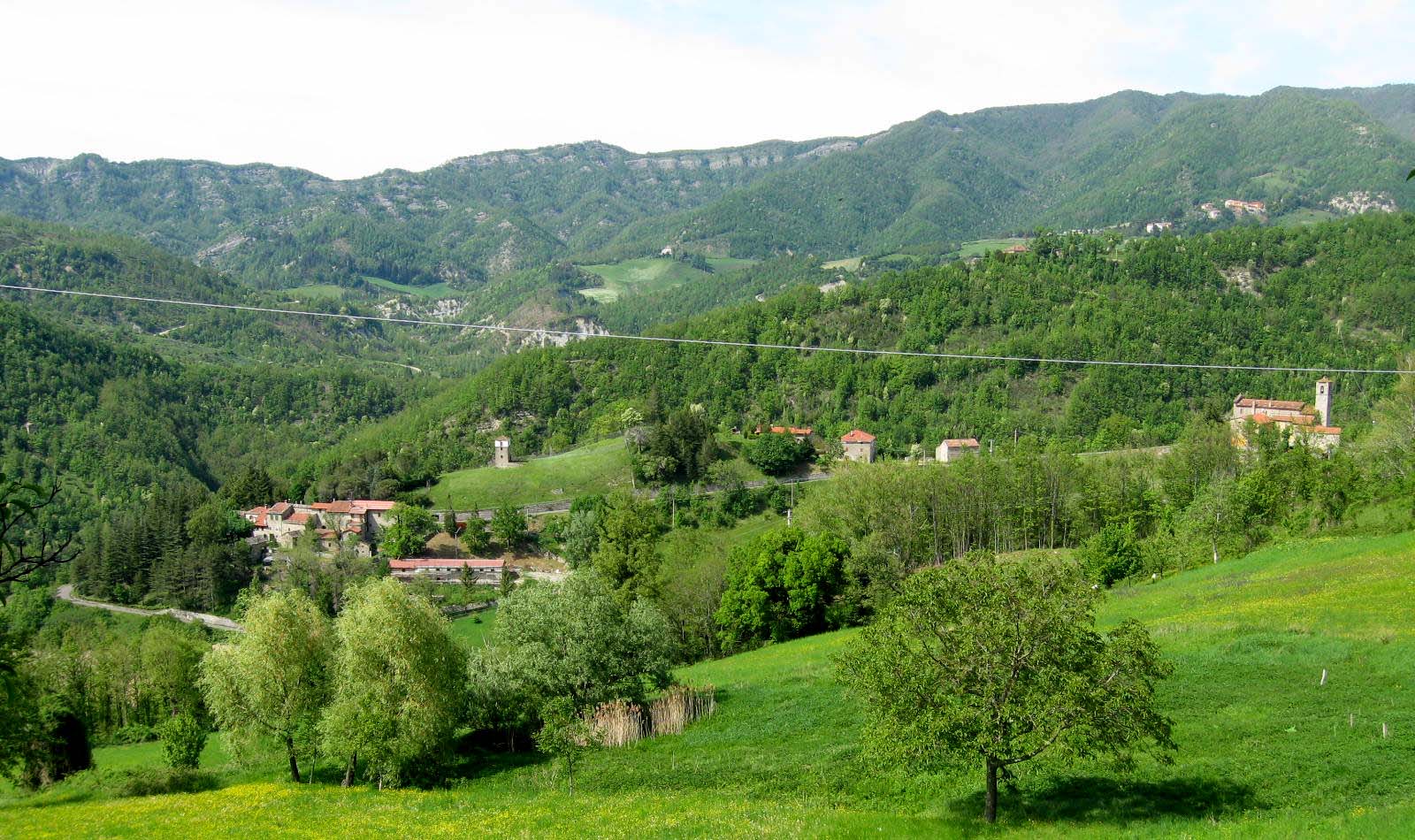
BORDIGNANO was the third parish of the Alps of the Ubaldini and had a castle at Belmonte and a stronghold at Citerna. In 1332 it too submitted to the Florentines and at once received the bell that was the mark of liberty for the whole valley.
For centuries these too were frontier lands, with bold and determined people. Here in 1506 came Niccolò Machiavelli – then secretary of the Florentine Republic and champion of a national militia – to recruit two large companies of soldiers, stationed at Firenzuola and Piancaldoli, each with its own battle standard; and it seemed the ancient warrior virtues of their Lombard and Sicambrian forefathers had been rediscovered. Machiavelli returned often to inspect their equipment, training and discipline in person, attending even to the smallest details of organisation.
The parish church, dedicated to the beheading of St John the Baptist, was entirely rebuilt in 1926. The various oratories that once served for celebrations in honour of their patron saints were left unused and unguarded after the feast days were suppressed or moved — as with the chapel of Santa Cristina (10 May), apparently dating from the late fourteenth century, which drew the attention of obsessive looters.
According to the censuses of 1551, 1745 and 1833, Bordignano had populations of 173, 261 and 318 inhabitants respectively.
Belmonte
Belmonte stands on a rise at the centre of the upper Valle del Diaterna, in a strategic position that through the Middle Ages allowed control of the links between the upper Santerno valley and Romagna by way of the Sillaro valley. It belonged to the parish of Bordignano, of which it was one of the more important settlements, and held a castle of the Ubaldini, the powerful feudal family that ruled these mountains for centuries.
In 1332, together with the other lands of the Bordignano parish district, Belmonte submitted to the Republic of Florence. The stronghold's history was troubled, however: around 1273 the Commune of Florence had already attempted its demolition, yet in 1378 there is still mention of a forced surrender of the Rocca di Belmonte by the Ubaldini, who ceded it along with the Rocca Buna as vassal districts of the castles of Piagnole and Lozzole. Only in 1350 did the Ubaldini of Bordignano finally abolish the medieval bans and become citizens of Florence.
Today the village is a place of rare quiet, set among the woods of the Tuscan-Romagnol Apennines. It offers spectacular views over the valley below and makes an ideal starting point for walks along the ridge paths dividing Tuscany from Emilia-Romagna.
Photos of Belmonte
No photographs of Belmonte are available yet.
Caburaccia
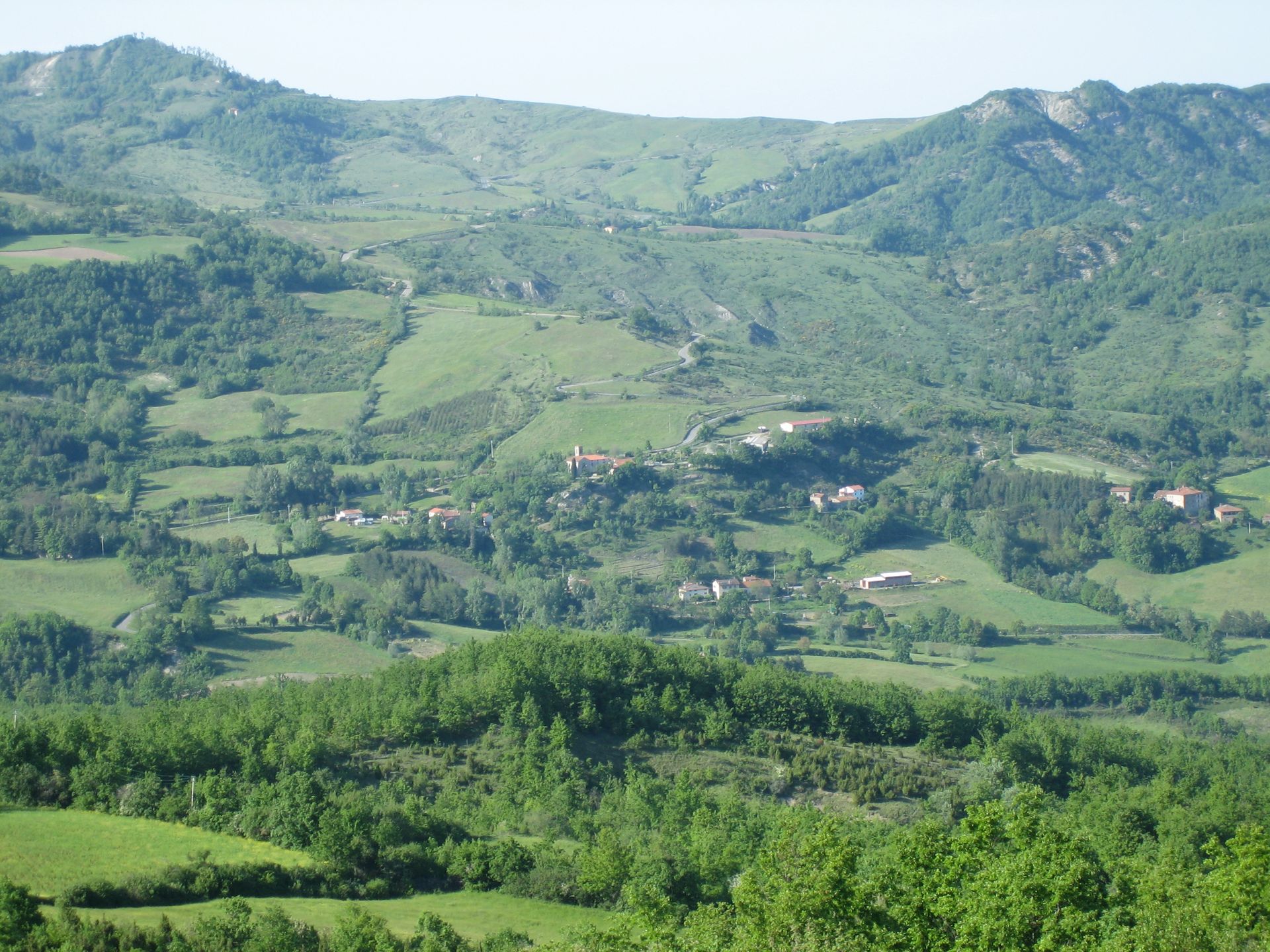
Caburaccia stretches along the Apennine ridge near the Raticosa Pass, on the old Imola road that linked Tuscany to Emilia-Romagna. The hamlet preserves traces of an ancient settlement: the original parish church is recorded as early as 1337, and the present one, dedicated to St John the Baptist, was entirely rebuilt in 1926, keeping valuable liturgical objects of historical and artistic interest.
Caburaccia is one of the valley's most remote outposts. In 1361 it was the scene of a significant military episode: Bolognese troops camped there to receive food and war supplies from the Florentines by way of the Scarperia pass, while the Ubaldini still controlled the busiest mountain crossings.
Near the hamlet stands the Sasso di San Zanobi, the striking ophiolitic rock formation with its characteristic greenish and violet streaks, bound to one of the legends dearest to local tradition. Every first Sunday in July a procession sets out from Caburaccia carrying the saint's statue to the foot of the rock, where a preacher reads his praises.
The surrounding land, marked by beech woods and chestnut groves, offers some of the most striking walking routes in the Mugello Apennines, with views that on clear days reach as far as the Adriatic.
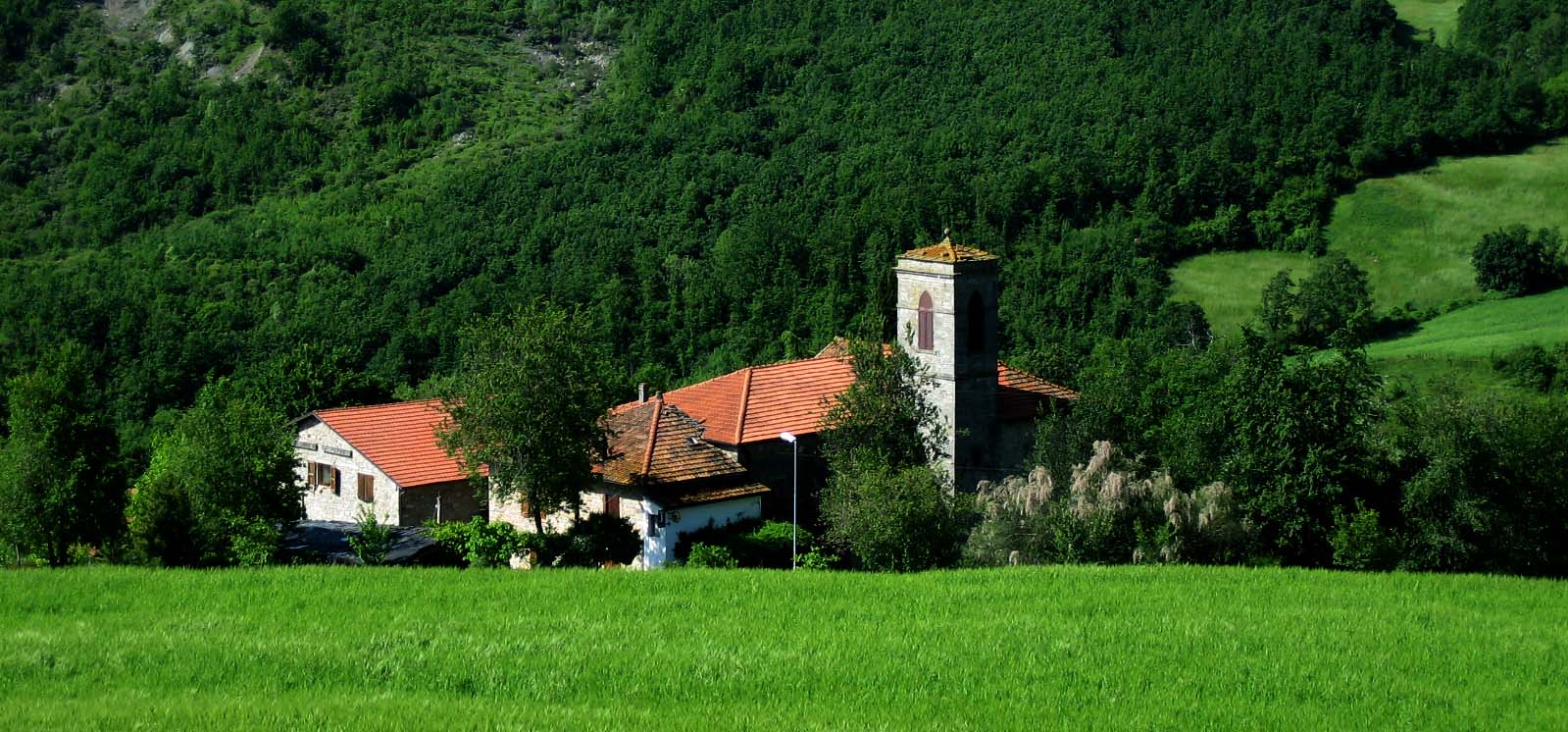
Castelvecchio
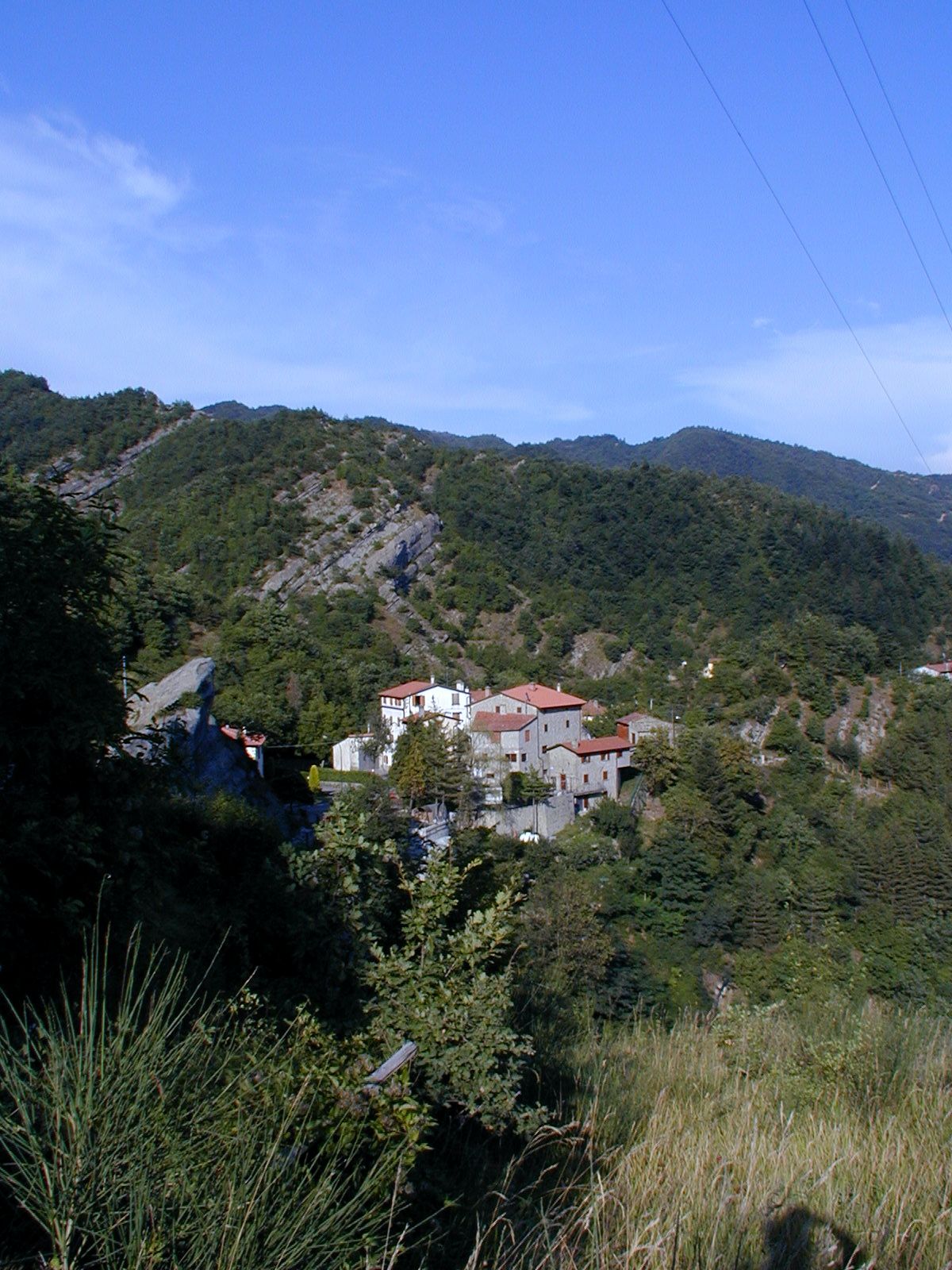
Castelvecchio stands on the crest of a knoll at the first springs of the Diaterna stream, in a setting of extraordinary natural beauty. Its settlement dates to the fourteenth century: the castle of Carpino, which stood in the Bordignano parish district, is recorded in a sale of 1228, and the local church is first mentioned in a document of 1385, dedicated to St Cristina and St George.
In his Dizionario Geografico, Repetti identifies Castelvecchio as a castle site with a parish church attached to the parish of Bordignano, and notes nearby a place called from time immemorial La Fossa di Catilina. According to local tradition this evocative name recalls the death in battle of the Roman patrician Lucius Sergius Catilina in 62 BC, though the matter remains open between history and legend.
The old medieval village has kept its suspended atmosphere through the years. Set between Bordignano and Visignano, close to the sources of the Diaterna, Castelvecchio is today a destination for walkers who follow the ridge paths and look for places where history, legend and nature merge in a singular way.
Visignano

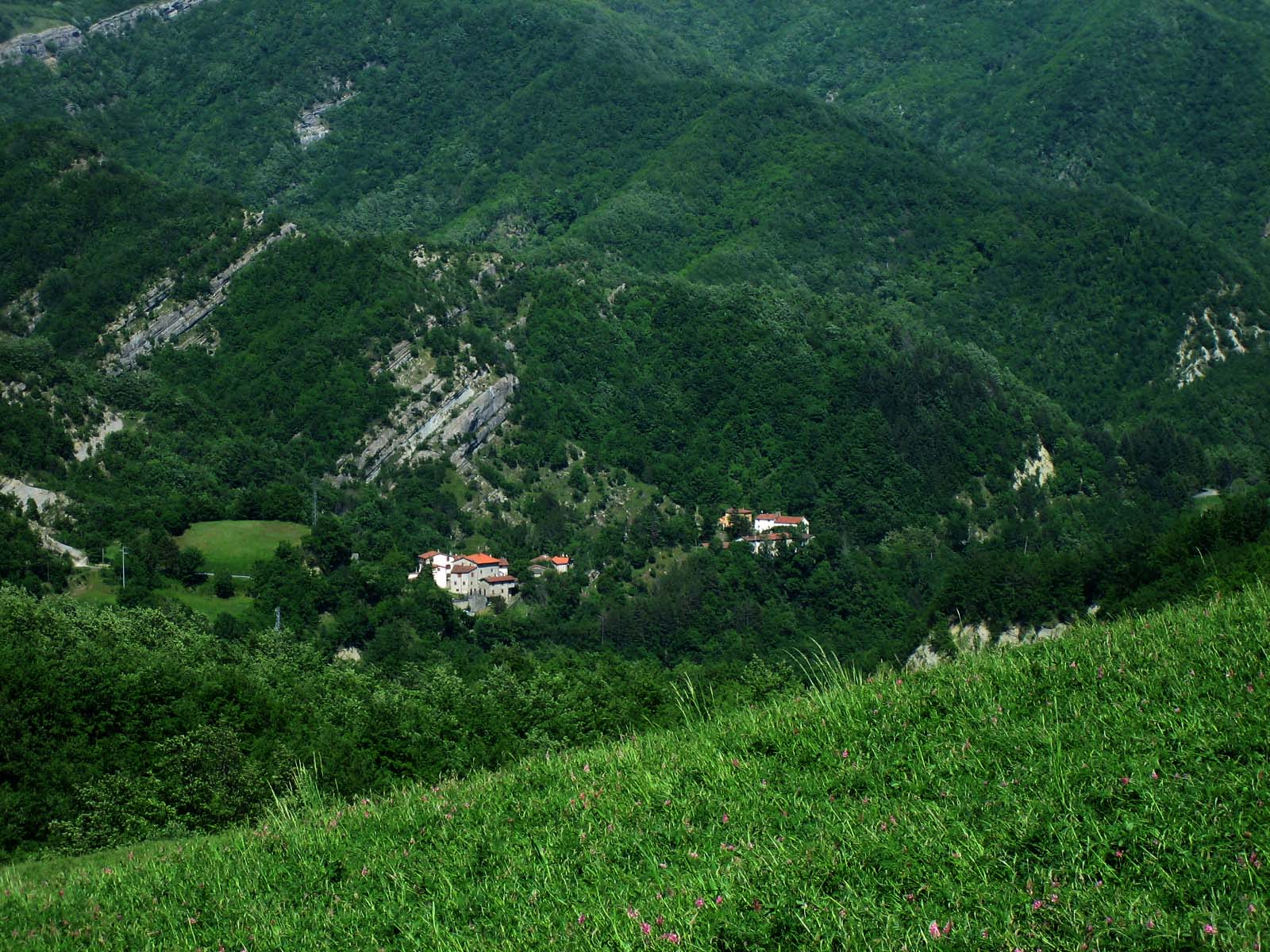
Visignano is the highest hamlet in the Valle del Diaterna, set on the Apennine ridge near Bordignano and Castelvecchio. A village of very ancient origin — the castle of Visignano is already named in a deed of 1228, when its lord sold the castle of Carpino to the Ubaldini — Visignano was for centuries a strategic reference point in the control of the mountain passes.
The parish church, dedicated to Saints James and George, is relatively recent (1911) but worth a visit for its Greek-cross plan and its wide windows with stained glass made by the Fornaci Chini of Borgo San Lorenzo, depicting the Four Evangelists. The Chini kilns were among the leading art manufactories of Italian Art Nouveau, and their presence at Visignano shows that beauty was sought even in these remote valleys.
From the hamlet there are spectacular views over the whole valley and the ridges dividing Tuscany from Emilia-Romagna. Its high position makes Visignano an ideal starting point for walks towards the Raticosa Pass and along the CAI paths that cross these woods.
The Diaterna Stream

The Diaterna is a stream of the Tuscan-Romagnol Apennines whose name comes from the Latin Dea Terna, "the goddess with three arms": the stream is in fact formed by three distinct branches that join along their course towards the Santerno.
The main branch, called Diaterna di Caburaccia, rises at Colle di Canda at 907 metres. After 4.5 km it takes in the Castelvecchio branch at Bordignano and, 6.5 km further on, the Diaterna Valica at Cerreta. The Diaterna di Castelvecchio rises near the Sasso di San Zanobi and after about 4 km joins the main branch at Bordignano. The Diaterna Valica rises at the Raticosa Pass, runs through Pietramala, joins the Badia ditch and flows into the main branch at Cerreta after 7 km. The stream thus formed runs for some 20 km in all before entering the Santerno near Camaggiore.
The Diaterna is the backbone of the valley's whole ecosystem. Its waters, cool and clear for most of the year, host valuable fish and feed a riparian vegetation rich in willows, alders and poplars. The valley slopes are dominated by mixed woods of chestnut, beech and oak, home to roe deer, red deer, wild boar and, more rarely, the Apennine wolf.
For centuries the stream was the valley's main economic resource: the watermills that harnessed its current were essential to the life of the local communities, and to this day the river landscape remains one of the most distinctive and captivating features of this land.